Crypto Market Crash Tests Investor Conviction
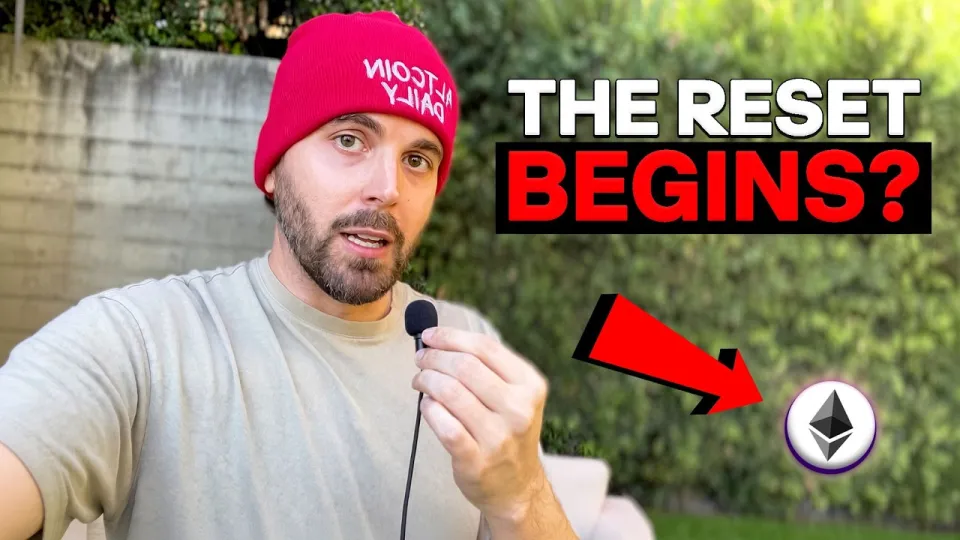
Video: Crypto Investors Are In Serious Trouble (market crash)
Want articles like this for your own video to promote it on YouTube and Google? Order them through the Telegram bot @sat_sit_bot. Articles with your video embedded are written and posted by the bot itself — on popular topical sites (no ads). Your first 50 articles are free.
· based on the channel Altcoin Daily
Key takeaways
- Bitcoin traded at $80,707 on October 24, 2026, according to a figure cited in the video's comments.
- Bitcoin's five-year compound annual growth rate at that price was 5.78%, well below the returns many holders expected.
- Some viewers describe the drop as routine market manipulation rather than the end of the cycle.
- Long-term holders in the comments say they are averaging down and buying dips instead of selling.
- The video is a market-crash breakdown published by the Altcoin Daily channel.
A crypto market crash is a sharp, broad decline in digital asset prices that forces investors to decide whether to sell, hold or buy more. The current drawdown has pushed Bitcoin to around $80,707 as of October 24, 2026, a level that leaves its five-year compound annual growth rate at just 5.78%. For anyone who entered expecting triple-digit annual returns, that number is the real story behind the red candles, and it is the frame Altcoin Daily uses in its crash breakdown, with merch and community links available through the Altcoin Daily shop.
What the crypto market crash actually looks like in numbers
The defining feature of this downturn is not a single catastrophic day but the erosion of long-term returns. At $80,707, Bitcoin's five-year CAGR of 5.78% is roughly in line with a savings product and far below the narrative that built the last cycle. That gap between expectation and outcome is what makes investors feel trapped: the asset did not go to zero, but it also did not deliver the compounding that justified the risk.
Several forces combine in a drawdown of this shape:
- Leverage unwinding — forced liquidations accelerate price moves in both directions.
- Thin liquidity — order books thin out, so the same sell pressure moves price further.
- Narrative fatigue — when the promised upside keeps slipping, new buyers stop showing up.
- Rotation — capital leaves risk assets for safer yield when uncertainty rises.
Viewers of the breakdown are split on the cause. Some call the move ordinary manipulation rather than a genuine crash, while others point to structural issues such as Bitcoin making lower highs within a cycle while Ethereum fails to set new highs at all. Both readings can be true at once: manipulation exists at the margins, but a 5.78% five-year CAGR is a structural fact, not a chart trick.
Why long-term crypto holders are not panicking
The most consistent response from experienced holders is that a crash is a pricing event, not a thesis event. Investors who set a multi-year horizon before the drop are treating the drawdown as the moment their plan was designed for. One widely shared approach in the comments is simple: hold the core position, keep cash ready, and add on the deepest dips rather than trying to catch the exact bottom.
Averaging down works only under specific conditions, so it is worth being explicit about them:
- You have dry powder that is not needed for living expenses.
- Your position size still lets you sleep if prices fall another 30%.
- You are adding to assets you would hold through a full cycle, not to a trade you hope to exit next month.
- You accept that the average entry price improves slowly, not immediately.
Some viewers describe checking prices less often on purpose, logging in every couple of weeks instead of daily, and redirecting attention to cash flow and living conditions. That is not apathy; it is a deliberate reduction in the number of decisions a volatile market can push you into.
The questions investors keep asking during a drawdown
Recurring doubts in the community fall into a few predictable buckets, and each has a practical answer. The first is survival of the channel or analyst itself: viewers ask whether Altcoin Daily will still be around next cycle or whether this bull run is the last one covered. The honest answer is that no media outlet should be the foundation of a portfolio; treat commentary as input, not as a signal service.
The second bucket is transparency about holdings. Viewers repeatedly ask for the full altcoin portfolio list behind the commentary, and the reasonable expectation is that anyone making calls should disclose what they hold and whether they are buying or selling. The third is price targets, with predictions like Solana reaching $1,000 by 2028 circulating freely. A target without a timeframe, a valuation method and a risk case is entertainment, not analysis.
The fourth bucket concerns large institutional players. Questions about what would have to happen for a major Ethereum treasury holder such as BitMNR to start selling ETH are really questions about supply overhang: if the largest holders become sellers, the bid has to absorb that flow. Watching treasury disclosures matters more than watching price alone.
How to position a portfolio when prices are falling
Positioning during a crash is mostly about sequence, not prediction. Start by writing down what percentage of your portfolio each asset represents at current prices, because a 40% drawdown silently changes your allocation. Then decide, in advance, the price bands where you would add and the size of each add. Finally, set a rule for when you would stop adding, so a falling market cannot consume all your cash.
Useful guardrails include keeping stablecoin reserves separate from trading capital, avoiding leverage entirely in a downtrend, and reviewing positions on a fixed schedule rather than reacting to every headline. If you are also considering equities, treat that as a separate allocation decision with its own risk budget, not as a hedge that automatically offsets crypto losses.
Where to find Altcoin Daily's links and updates
All official links referenced in the breakdown are collected in one place. The channel's merchandise store is the primary link:
- Altcoin Daily merch and shop: https://altcoindailyshop.myshopify.com
Be cautious with any other domain claiming to represent the channel, especially ones that ask for wallet connections or seed phrases. Legitimate merchandise stores do not need access to your crypto wallet.
Summary
A crash near $80,707 with a five-year CAGR of 5.78% is a reminder that crypto returns are not guaranteed and that timing matters less than position sizing and patience. Long-term holders are averaging down selectively, keeping cash reserves, and checking prices less often, while skeptics point to lower highs and manipulation. Whatever camp you fall into, the decision should be written down before the next red candle, not during it. Altcoin Daily produced the video breakdown this article draws on, and its merch store is the place to support the channel directly.
Source: Crypto Investors Are In Serious Trouble (market crash) · Markdown version
Questions & answers
Is the crypto market actually crashing or is it just manipulation?
Both explanations can coexist. Leverage liquidations and thin liquidity amplify moves that look engineered, but structural data such as Bitcoin's 5.78% five-year CAGR at $80,707 shows a real erosion of returns, not only a chart trick.
Should I keep buying altcoins during a crash?
Only with money you will not need for years and only if your position size survives another 30% decline. Decide your price bands and add sizes in advance, and stop adding when your pre-set limit is reached.
What does a 5.78% five-year CAGR for Bitcoin mean for investors?
It means Bitcoin's compounding over that window was closer to a conservative savings product than to the spectacular returns of earlier cycles. Investors who budgeted for triple-digit annual gains need to revise their expectations.
How often should I check prices during a drawdown?
Many long-term holders deliberately check less often, sometimes every couple of weeks, to avoid reactive decisions. Review on a fixed schedule instead of watching every candle.